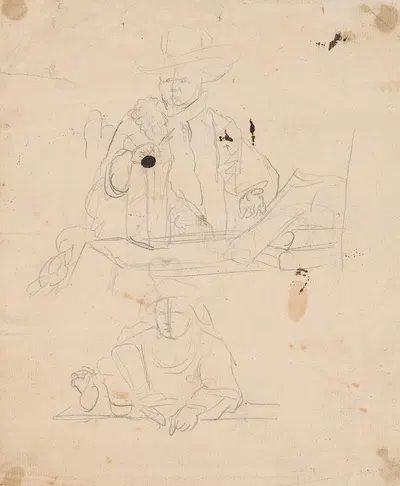
Turbaned Woman (1640–1642)
Guido ReniFor your project
- Source and licence confirmed before use
- Print-ready master at your wall size
- Adapted to your format and palette on request
Provenance / Rights
- Rights
- Public domain (artist died 1642)
SPECIFICATIONS
- Artist
- Guido Reni
- Category
- Drawings
- Year
- 1640–1642
- Nationality / school
- Italian
- Lifespan
- 1575–1642
- Orientation
- Portrait
- Material
- Digital JPEG + PDF files
- Available sizes
- Print-ready master at your wall size, on request
HELPFUL LINKS
ABOUT THE ARTWORK
Dated 1640–1642, "Turbaned Woman" is an artwork by Guido Reni. Drawings in brief: Drawings range from quick preparatory sketches to finished works in pen, chalk, charcoal, graphite, or wash. Artists have long used drawings to plan paintings, sculptures, and buildings, so a sketch can show how an idea developed. Context for 1640–1642: In Japan the Edo period began in 1603, and in China the Qing dynasty took power in 1644, both bringing new patrons and styles. In the Dutch Republic, a prosperous middle-class market supported landscapes, still lifes, portraits, and scenes of daily life painted at a modest scale for the home. It is listed in the Drawings collection. The image is in portrait orientation.
Everything for "Turbaned Woman" arrives digitally: Digital JPEG + PDF files, 300 DPI. Once payment is confirmed, an email brings the download link, and from there you decide how to print it, whether at home, at a print shop, or through an online service. A portrait format suits narrow wall spaces, hallways, and the area beside a door or window. Drawings and sketches stand out through line clarity and a sense of the artist process, which makes them a natural fit for minimalist, monochrome, and graphic interiors. Matching the frame to the image proportions avoids cropping. Choosing a standard frame size and printing to fit it often saves the cost of custom framing. Screens and printers render colour differently, so a small test print is a sensible way to check tones before committing to a large size. Matte and fine-art papers reduce glare in bright rooms, while glossy papers give stronger contrast and deeper blacks.
ABOUT THE ARTIST
Italian, 1575–1642
If you like the visual language of Guido Reni, explore more works by the same artist in our collection.