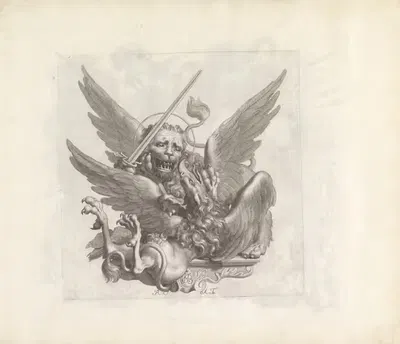
Eight Figural Views (Sugata Hakkei) Pl.8 (1850)
Utagawa Kunisada (Toyokuni III)For your project
- Source and licence confirmed before use
- Print-ready master at your wall size
- Adapted to your format and palette on request
Provenance / Rights
- Rights
- Public domain (artist died 1865)
SPECIFICATIONS
- Artist
- Utagawa Kunisada (Toyokuni III)
- Category
- Illustration
- Year
- 1850
- Nationality / school
- Japanese
- Lifespan
- 1786–1865
- Orientation
- Landscape
- Material
- Digital JPEG + PDF files
- Available sizes
- Print-ready master at your wall size, on request
HELPFUL LINKS
ABOUT THE ARTWORK
This page presents "Eight Figural Views (Sugata Hakkei) Pl.8" (1850), created by Utagawa Kunisada (Toyokuni III). Illustration in brief: Illustration serves a text or a story, a tradition that runs from decorated medieval manuscripts to printed book plates, magazines, and posters. Printing methods such as woodcut, engraving, lithography, and photomechanical reproduction each shaped how illustrators worked. About the period around 1850: The invention of lithography around 1796 and its spread in these decades made printed images cheaper and more varied. The first half of the nineteenth century moved from Neoclassicism to Romanticism, which placed emotion, nature, and the sublime at the centre of painting. The catalogue places it in Illustration. The format is landscape.
On onlly.art "Eight Figural Views (Sugata Hakkei) Pl.8" is sold as a digital download (Digital JPEG + PDF files, 300 DPI). The files are delivered by email after payment, so nothing is shipped: you print locally, choosing the paper, size, and frame yourself. A landscape format suits wide, low wall spaces such as the stretch above a bed, mantel, or sideboard. Illustrative graphics are valued for their decorative line work and narrative quality, which makes them a strong fit for gallery walls, kids rooms, studies, and more intimate interiors. Before printing, compare the proportions of the file with your frame so that nothing important is cropped. Hang the print away from direct sunlight, which over the years can fade any printed colour. Screens and printers render colour differently, so a small test print is a sensible way to check tones before committing to a large size. Matte and fine-art papers reduce glare in bright rooms, while glossy papers give stronger contrast and deeper blacks.
ABOUT THE ARTIST
Japanese, 1786–1865
If you like the visual language of Utagawa Kunisada (Toyokuni III), explore more works by the same artist in our collection.