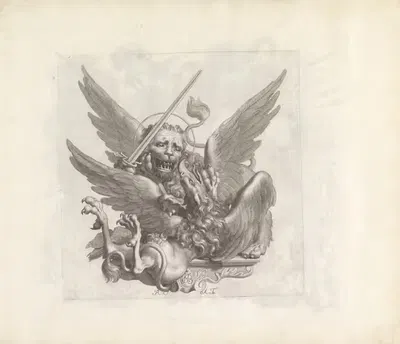
Donau und Karpatenlander (1926)
Ernst FriedrichFor your project
- Source and licence confirmed before use
- Print-ready master at your wall size
- Adapted to your format and palette on request
Provenance / Rights
- Rights
- Public domain (artist died 1937)
SPECIFICATIONS
- Artist
- Ernst Friedrich
- Category
- Illustration
- Year
- 1926
- Nationality / school
- German
- Lifespan
- 1867–1937
- Orientation
- Landscape
- Material
- Digital JPEG + PDF files
- Available sizes
- Print-ready master at your wall size, on request
HELPFUL LINKS
ABOUT THE ARTWORK
This page presents "Donau und Karpatenlander" (1926), created by Ernst Friedrich. Context for 1926: The first decades of the twentieth century were a period of rapid experiment, with Fauvism, Expressionism, Cubism, Futurism, and the first abstract painting appearing within a few years of each other. Posters, magazines, and illustrated books were major ways for the public to meet new art and design. It is listed in the Illustration collection. The image is in landscape orientation. Background on Illustration: Illustration serves a text or a story, a tradition that runs from decorated medieval manuscripts to printed book plates, magazines, and posters. The late nineteenth and early twentieth centuries are often described as a golden age of book and magazine illustration.
Everything for "Donau und Karpatenlander" arrives digitally: Digital JPEG + PDF files, 300 DPI. Once payment is confirmed, an email brings the download link, and from there you decide how to print it, whether at home, at a print shop, or through an online service. A landscape format suits wide, low wall spaces such as the stretch above a bed, mantel, or sideboard. Matching the frame to the image proportions avoids cropping. Hang the print away from direct sunlight, which over the years can fade any printed colour. Screens and printers render colour differently, so a small test print is a sensible way to check tones before committing to a large size. Matte and fine-art papers reduce glare in bright rooms, while glossy papers give stronger contrast and deeper blacks.
ABOUT THE ARTIST
German, 1867–1937
If you like the visual language of Ernst Friedrich, explore more works by the same artist in our collection.