$2.99digital file
Add to cart
Add to wishlist
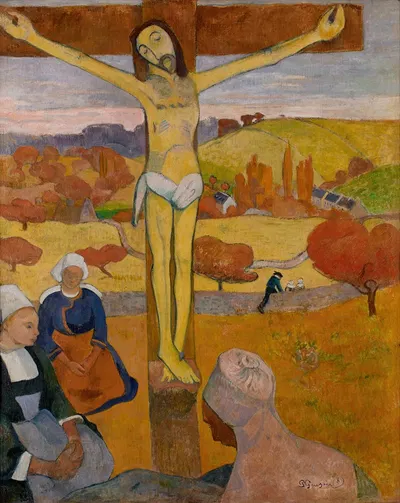
Paul Gauguin (1848–1903) was a French painter associated with Post-Impressionism, Symbolism and Synthetism. Born in Paris, he worked as a stockbroker from 1871 and painted in his spare time, showing with the Impressionists in the early 1880s. After the stock market crash of 1882 he decided to paint full-time. In Pont-Aven in Brittany, and during a stay in Martinique in 1887, he moved towards flat areas of strong colour and simplified forms. In 1888 he spent nine weeks in Arles painting alongside Vincent van Gogh. Gauguin went to Tahiti in 1891, returned to France in 1893, and left again for Tahiti in 1895, never coming back to Europe. He settled in the Marquesas Islands in 1901. Well-known works include The Yellow Christ (1889), Nevermore (1897) and the large Where Do We Come From? What Are We? Where Are We Going? (1897). He died at Atuona on the island of Hiva Oa in 1903.


![Eve ['The Nightmare'] by Paul Gauguin, 1899–1900 — digital art print download](/api/image-proxy?url=https%3A%2F%2Fmdl.artvee.com%2Fsftb%2F43543dr.jpg&w=400&q=78)