$2.99digital file
Add to cart
Add to wishlist
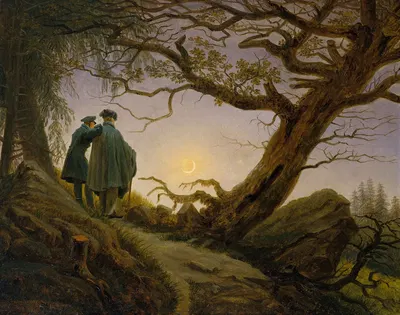
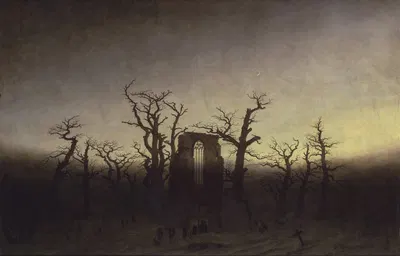
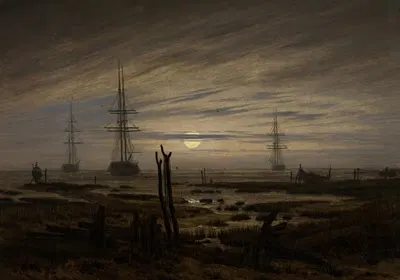
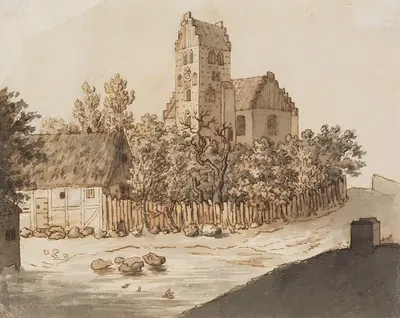
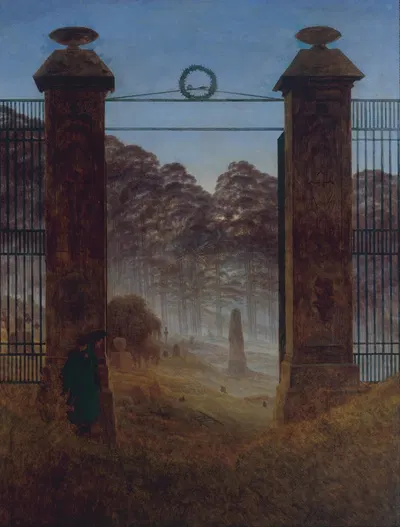
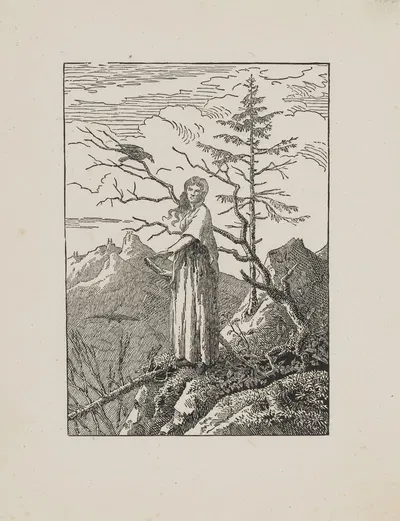
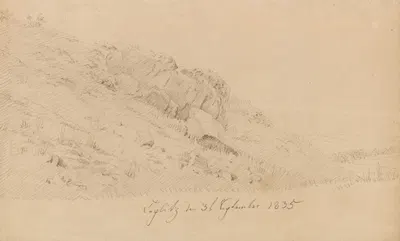
Caspar David Friedrich (1774–1840) was a German Romantic landscape painter, born in Greifswald on the Baltic coast, then part of Swedish Pomerania. He studied at the Copenhagen Academy from 1794 to 1798 and then settled in Dresden. A prize won at a competition organised by Goethe in Weimar in 1805 established his reputation. Friedrich painted mountains, seashores, ruins, mist and moonlit nights, often with solitary figures seen from behind, so that the viewer shares their contemplation. His important works include Cross in the Mountains (1808), The Abbey in the Oakwood (1808–10), The Cross Beside the Baltic (1815), Two Men Contemplating the Moon (1819) and The Sea of Ice (1823–24). He was elected to the Berlin Academy in 1810 and married Caroline Bommer in 1818. A stroke in 1835 limited his work, and he spent his later years in poverty. He died in Dresden in 1840, largely forgotten, and interest in his art revived after a Berlin exhibition in 1906.