New

For your project
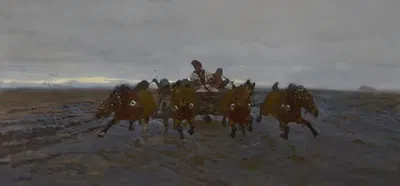
This page presents "A Village in the Caucasus" (1886), created by Rudolf Otto von Ottenfeld. About the period around 1886: Japanese prints reached Europe in large numbers and influenced many artists, while photography changed what painting needed to do. The later nineteenth century is the era of Impressionism, whose first group exhibition was held in Paris in 1874, followed by Post-Impressionism, Symbolism, and the Arts and Crafts movement. Landscape, a short history: Landscape became an independent genre in European painting in the sixteenth and seventeenth centuries, while in East Asia it had long been central to ink painting. The invention of paint in tubes in the 1840s made it easier to work outdoors, and landscape became a main subject of Romanticism, Realism, and Impressionism. It is listed in the Landscape collection. The image is in portrait orientation.
Your purchase of "A Village in the Caucasus" on onlly.art is a digital download: Digital JPEG + PDF files, 300 DPI. After payment the download link arrives by email, and you can send the files to any print service you trust. A portrait format suits narrow wall spaces, hallways, and the area beside a door or window. Landscape scenes add depth and a sense of air to the room, helping the space feel more open and working especially well above a sofa, console, or desk. If you are unsure about size, measure the wall first, then pick a frame whose proportions follow the image. Matte and fine-art papers reduce glare in bright rooms, while glossy papers give stronger contrast and deeper blacks. Hang the print away from direct sunlight, which over the years can fade any printed colour. Screens and printers render colour differently, so a small test print is a sensible way to check tones before committing to a large size.
German, 1856–1913
If you like the visual language of Rudolf Otto von Ottenfeld, explore more works by the same artist in our collection.