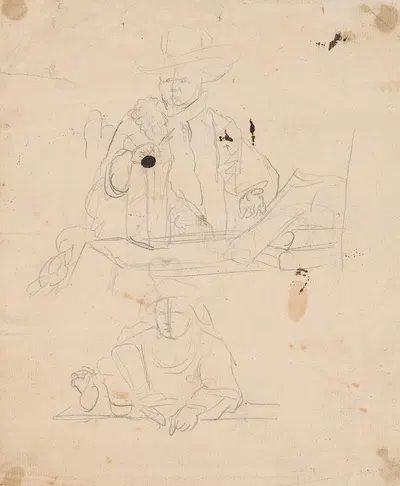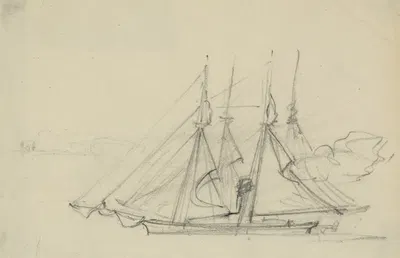

The soldier returns to the hearth (1860-1865)
Alfred Rudolph WaudFor your project
- Source and licence confirmed before use
- Print-ready master at your wall size
- Adapted to your format and palette on request
Provenance / Rights
- Rights
- Public domain (artist died 1891)
SPECIFICATIONS
- Artist
- Alfred Rudolph Waud
- Category
- Drawings
- Year
- 1860-1865
- Nationality / school
- American
- Lifespan
- 1828–1891
- Orientation
- Landscape
- Material
- Digital JPEG + PDF files
- Available sizes
- Print-ready master at your wall size, on request
HELPFUL LINKS
ABOUT THE ARTWORK
This page presents "The soldier returns to the hearth" (1860-1865), created by Alfred Rudolph Waud. The catalogue places it in Drawings. The format is landscape. Drawings, a short history: Artists have long used drawings to plan paintings, sculptures, and buildings, so a sketch can show how an idea developed. Drawings range from quick preparatory sketches to finished works in pen, chalk, charcoal, graphite, or wash. Historical background, 1860-1865: Japanese prints reached Europe in large numbers and influenced many artists, while photography changed what painting needed to do. The later nineteenth century is the era of Impressionism, whose first group exhibition was held in Paris in 1874, followed by Post-Impressionism, Symbolism, and the Arts and Crafts movement.
"The soldier returns to the hearth" is offered as a printable file (Digital JPEG + PDF files, 300 DPI) rather than a shipped item. You receive the files by email after payment and handle printing yourself, which gives you full control over paper, size, and finish. A landscape format suits wide, low wall spaces such as the stretch above a bed, mantel, or sideboard. Measuring the wall before choosing a size is the simplest way to avoid a print that feels too small or too large. Choosing a standard frame size and printing to fit it often saves the cost of custom framing. Screens and printers render colour differently, so a small test print is a sensible way to check tones before committing to a large size. Matte and fine-art papers reduce glare in bright rooms, while glossy papers give stronger contrast and deeper blacks.
ABOUT THE ARTIST
American, 1828–1891
If you like the visual language of Alfred Rudolph Waud, explore more works by the same artist in our collection.