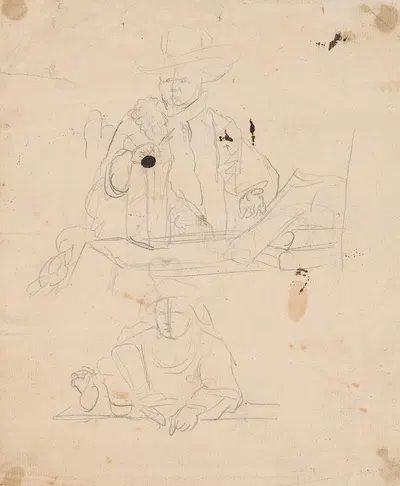
Reclining Female Nude Figure (1560–1635)
Domenico TintorettoFor your project
- Source and licence confirmed before use
- Print-ready master at your wall size
- Adapted to your format and palette on request
Provenance / Rights
- Rights
- Public domain (artist died 1635)
SPECIFICATIONS
- Artist
- Domenico Tintoretto
- Category
- Drawings
- Year
- 1560–1635
- Nationality / school
- Italian
- Lifespan
- 1560–1635
- Orientation
- Landscape
- Material
- Digital JPEG + PDF files
- Available sizes
- Print-ready master at your wall size, on request
HELPFUL LINKS
ABOUT THE ARTWORK
"Reclining Female Nude Figure" (1560–1635) is a work by Domenico Tintoretto. Historical background, 1560–1635: The sixteenth century includes the High Renaissance in Italy, the Mannerist generation that followed it, and the Northern Renaissance of artists such as Dürer, Holbein, and Bruegel. Elsewhere, the Mughal court in India developed a distinctive tradition of miniature painting, and printed images continued to travel widely between countries. The catalogue places it in Drawings. The format is landscape. Drawings, a short history: Drawings range from quick preparatory sketches to finished works in pen, chalk, charcoal, graphite, or wash. Artists have long used drawings to plan paintings, sculptures, and buildings, so a sketch can show how an idea developed.
On onlly.art "Reclining Female Nude Figure" is sold as a digital download (Digital JPEG + PDF files, 300 DPI). The files are delivered by email after payment, so nothing is shipped: you print locally, choosing the paper, size, and frame yourself. A landscape format suits wide, low wall spaces such as the stretch above a bed, mantel, or sideboard. Before printing, compare the proportions of the file with your frame so that nothing important is cropped. Hang the print away from direct sunlight, which over the years can fade any printed colour. Screens and printers render colour differently, so a small test print is a sensible way to check tones before committing to a large size. Matte and fine-art papers reduce glare in bright rooms, while glossy papers give stronger contrast and deeper blacks.
ABOUT THE ARTIST
Italian, 1560–1635
If you like the visual language of Domenico Tintoretto, explore more works by the same artist in our collection.