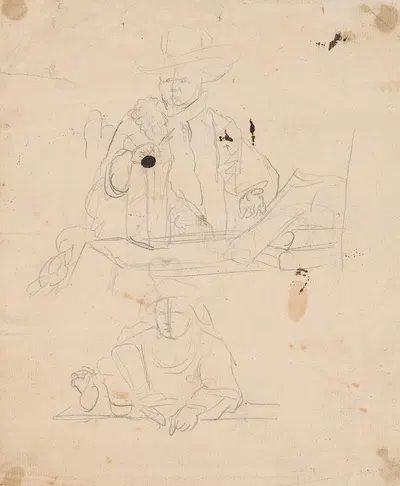
Kvinne som melker en ku (1848)
Adolph TidemandFor your project
- Source and licence confirmed before use
- Print-ready master at your wall size
- Adapted to your format and palette on request
Provenance / Rights
- Rights
- Public domain (artist died 1876)
SPECIFICATIONS
- Artist
- Adolph Tidemand
- Category
- Drawings
- Year
- 1848
- Nationality / school
- Norwegian
- Lifespan
- 1814–1876
- Orientation
- Landscape
- Material
- Digital JPEG + PDF files
- Available sizes
- Print-ready master at your wall size, on request
HELPFUL LINKS
ABOUT THE ARTWORK
Adolph Tidemand is the artist behind "Kvinne som melker en ku", dated 1848. It is listed in the Drawings collection. The image is in landscape orientation. Background on Drawings: Drawings range from quick preparatory sketches to finished works in pen, chalk, charcoal, graphite, or wash. Because line carries so much of the effect, drawings tend to reward close looking at the quality of the mark. About the period around 1848: Landscape gained new prestige through groups such as the Barbizon painters in France and the Hudson River School in the United States, and by mid-century Realism turned to ordinary people and everyday labour. The invention of lithography around 1796 and its spread in these decades made printed images cheaper and more varied.
Buying "Kvinne som melker en ku" means getting a digital file, not a physical print: Digital JPEG + PDF files, 300 DPI, delivered by email once payment is confirmed. A 300 DPI file is intended for printing at home or at a local print shop, where you can choose a matte, satin, or fine-art paper to suit the room. A landscape format suits wide, low wall spaces such as the stretch above a bed, mantel, or sideboard. A simple frame with a mat often helps an image settle comfortably into a room. Hang the print away from direct sunlight, which over the years can fade any printed colour. Screens and printers render colour differently, so a small test print is a sensible way to check tones before committing to a large size. Matte and fine-art papers reduce glare in bright rooms, while glossy papers give stronger contrast and deeper blacks.
ABOUT THE ARTIST
Norwegian, 1814–1876
If you like the visual language of Adolph Tidemand, explore more works by the same artist in our collection.