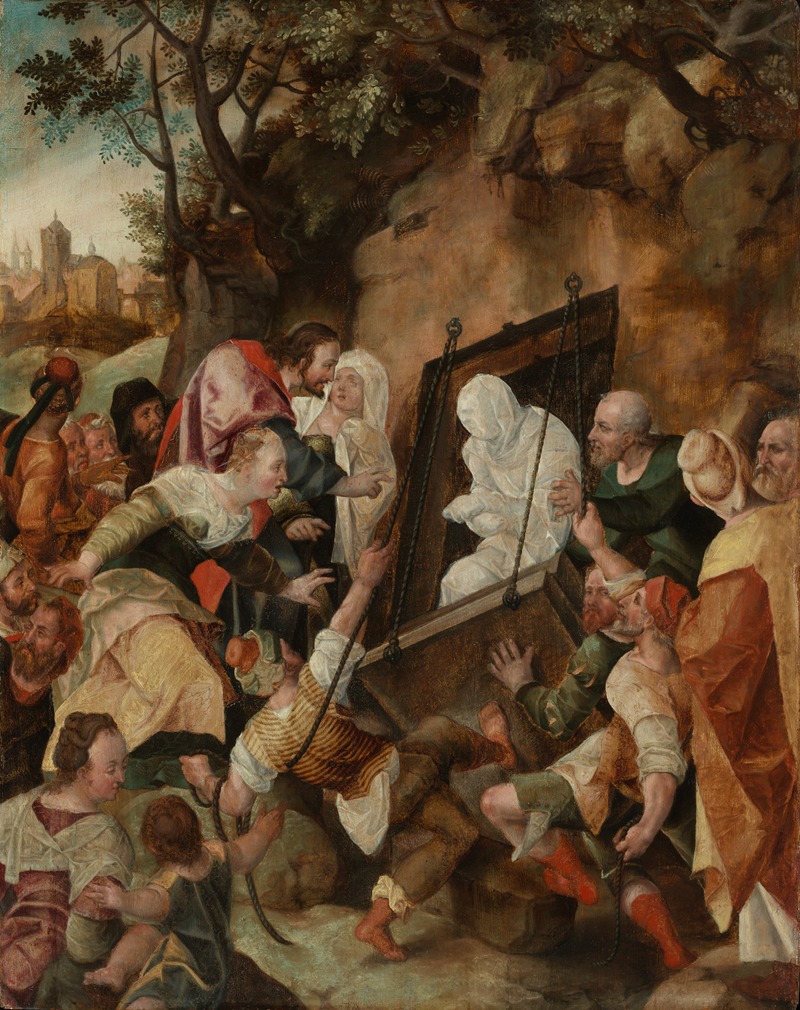
Auferweckung des Lazarus (1587)
Wendel DietterlinFor your project
- Source and licence confirmed before use
- Print-ready master at your wall size
- Adapted to your format and palette on request
Provenance / Rights
- Rights
- Public domain (artist died 1599)
SPECIFICATIONS
- Artist
- Wendel Dietterlin
- Category
- Religion
- Year
- 1587
- Nationality / school
- German
- Lifespan
- 1550–1599
- Orientation
- Portrait
- Material
- Digital JPEG + PDF files
- Available sizes
- Print-ready master at your wall size, on request
HELPFUL LINKS
ABOUT THE ARTWORK
Wendel Dietterlin is the artist behind "Auferweckung des Lazarus", dated 1587. Historical background, 1587: The sixteenth century includes the High Renaissance in Italy, the Mannerist generation that followed it, and the Northern Renaissance of artists such as Dürer, Holbein, and Bruegel. The Protestant Reformation changed how religious imagery was commissioned in northern Europe, while Venetian painters made rich colour and brushwork a central concern. Religion, a short history: Religious painting is among the largest bodies of art ever made, from altarpieces, icons, and illuminated manuscripts to devotional prints. Christian art follows long-established iconography, such as the Madonna and Child, the Annunciation, and the Crucifixion. It is listed in the Religion collection. The image is in portrait orientation.
On onlly.art "Auferweckung des Lazarus" is sold as a digital download (Digital JPEG + PDF files, 300 DPI). The files are delivered by email after payment, so nothing is shipped: you print locally, choosing the paper, size, and frame yourself. A portrait format suits narrow wall spaces, hallways, and the area beside a door or window. Religious subjects rely on symbolism, gesture, and layered painterly drama, so they tend to read best in calm and composed interiors. Before printing, compare the proportions of the file with your frame so that nothing important is cropped. Hang the print away from direct sunlight, which over the years can fade any printed colour. Screens and printers render colour differently, so a small test print is a sensible way to check tones before committing to a large size. Matte and fine-art papers reduce glare in bright rooms, while glossy papers give stronger contrast and deeper blacks.
ABOUT THE ARTIST
German, 1550–1599
If you like the visual language of Wendel Dietterlin, explore more works by the same artist in our collection.