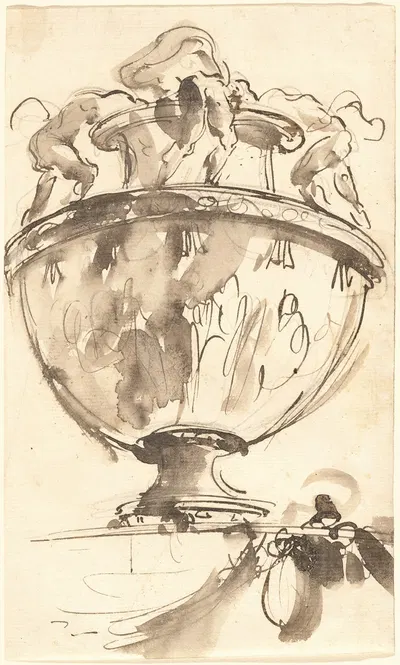
Vasi, candelabri, cippi, sarcophagi , titelblad til serien første bind
Giovanni Battista Piranesi1778$2.99digital file
Add to cart
Add to wishlist
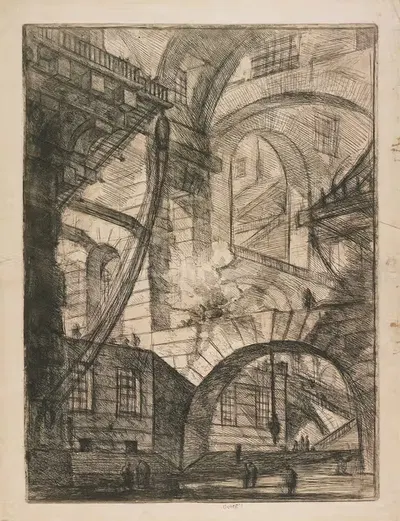
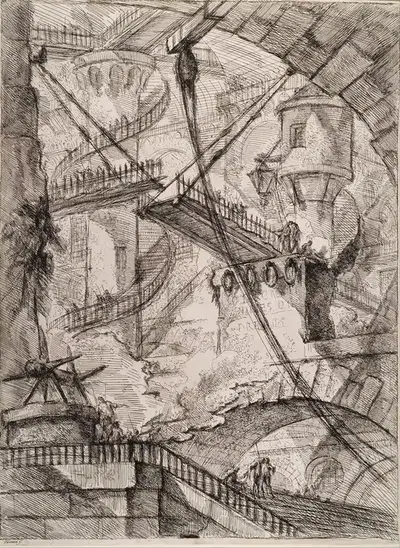
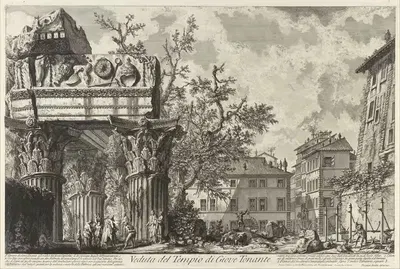
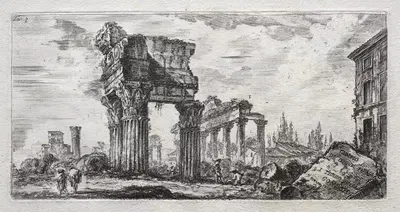
Giovanni Battista Piranesi (1720–1778) was an Italian etcher, architect and archaeologist, born in Venice. He trained with his uncle Matteo Lucchesi, and in 1740 he moved to Rome as a draughtsman, where he learned engraving from Giuseppe Vasi. His large etchings of Roman ruins and modern monuments, issued as the Vedute di Roma between 1748 and 1774, shaped how Europeans pictured the city for generations. Alongside them he made the Carceri d'invenzione, or Imaginary Prisons, begun in 1745 and reworked in 1761, a series of vast, dark and impossible interiors. His scholarly works include Campo Marzio dell'antica Roma (1762). He joined the Accademia di San Luca in 1761, was made a knight of the Golden Spur in 1767, and in 1764 was commissioned to restore the church of Santa Maria del Priorato in Rome, his only architectural work. Piranesi died in Rome in November 1778 and is buried in that church. He worked in the Neoclassical period.