US$2.99数字文件
加入购物车
加入收藏
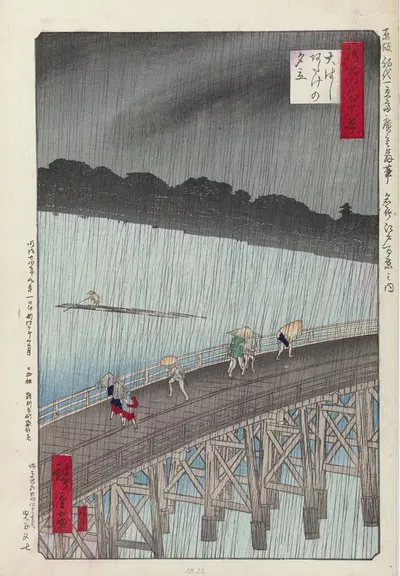
Utagawa Hiroshige (1797–1858), born Andō Tokutarō, was a Japanese ukiyo-e artist of the Edo period, often called the last great master of the tradition. He came from a samurai family and took over his father's post as a fire warden while still a teenager. He trained with Utagawa Toyohiro and was permitted to sign his work in 1812. After early prints of beauties and actors, he turned to landscape, influenced by Hokusai. A journey along the Tōkaidō road in 1832 inspired The Fifty-three Stations of the Tōkaidō (1833–34), his best-known series, and he went on to make The Sixty-nine Stations of the Kisokaidō with Keisai Eisen and, in his final years, One Hundred Famous Views of Edo. His prints are noted for a poetic mood, subtle colour and unusual vantage points, and he often used the vertical format for landscapes. He took Buddhist vows in 1856 and died in Edo in October 1858. His work influenced French artists, and Van Gogh copied some of his prints.